 Nile River Boat Cruise
Gebel El-Silsila
Gebel el-Silsila is the narrow stretch of the Nile 65 km north of Aswan, between Edfu and Kom Ombo, where Egypt cut its sandstone for more than a thousand years. More than 120 quarries line both banks, along with rock-cut shrines, royal stelae and a riverfront speos. None of the large-ship listings on this site names it as a stop. This guide covers what you see there, the history of the stone trade, and which Nile river cruises actually put you ashore.
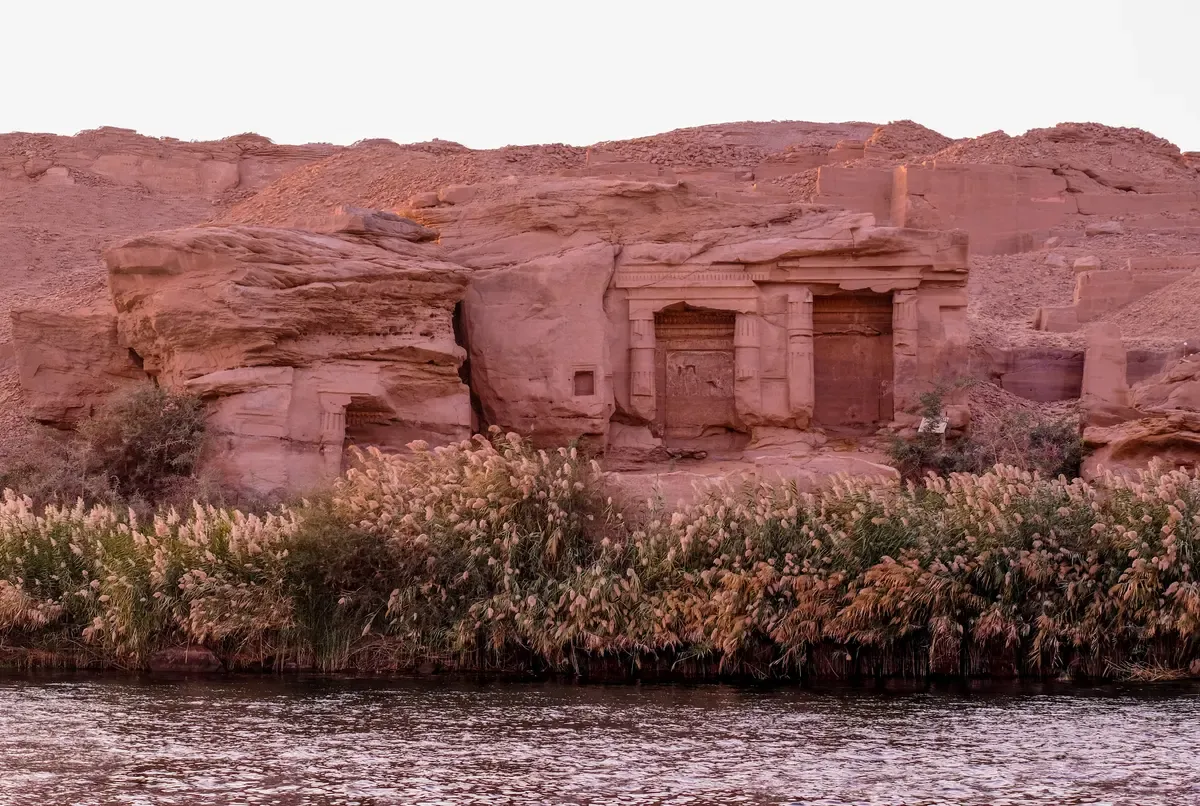
Rock-cut shrines face the Nile at Gebel el-Silsila. Photo: Lars Plougmann from United States, CC BY-SA 2.0, via Wikimedia Commons
Quick answer Gebel el-Silsila in brief
Gebel el-Silsila is an ancient sandstone quarry site 65 km north of Aswan, between Edfu and Kom Ombo. It holds more than 120 separate quarries, rock-cut shrines of Seti I, Ramesses II and Merenptah, four royal Nile stelae and a speos probably begun under Hatshepsut. The ministry opens it 7:00am to 4:00pm. Big cruise ships do not list it as a stop, but a dahabiya and a felucca listing do.
Key takeaways
- See it from the water on the Luxury Dahabiya Cruise, a 3-night sailing from Aswan with entrance fees to the listed sites included.
- The Overnight Felucca from Aswan has a 3-night option that stops at Gebel El-Silsila for about 1 hour, entry tickets extra.
- Compare the site with its neighbors in the guides to Kom Ombo Temple and Edfu Temple.
- Work out which direction and how many nights suit you in the route section of Nile river cruises.
The Quarries and Shrines
Gebel el-Silsila is not a single temple. It is a working landscape of quarries, huts, shrines and stelae spread along a narrow part of the river where the cliffs press close to the water.
What You Actually See
The site sits on both banks. The east bank holds 49 surveyed quarries, and the largest of them, Quarry 34, contains 54 stone huts where workers once sheltered. The west bank carries the religious monuments: the speos once called the temple of Horemheb, four royal Nile stelae south of it, and the rock-cut shrines of three pharaohs.
The Temple of Kheny, rediscovered in 2015, measures 80 by 40 m. An excavation team from Lund University has worked at the site since 2012.
| Feature | What it is |
|---|---|
| The quarries | More than 120 separate sandstone quarries on both banks, worked from the Middle Kingdom into modern times |
| Quarry 34 | The largest east bank quarry, holding 54 stone huts for the workforce |
| The speos | A rock-cut shrine on the west bank dedicated to seven deities including Amun and Sobek, probably created under Hatshepsut |
| Royal Nile stelae | Four stelae cut into the rock south of the speos |
| Pharaohs' shrines | Rock-cut shrines of Seti I, Ramesses II and Merenptah |
| Temple of Kheny | A temple rediscovered in 2015, measuring 80 by 40 m |
Opening Hours and Access
The ministry price list shows Gebel al-Silsila open 7:00am to 4:00pm. The listings that call here arrive by boat. The east bank and west bank hold different monuments, and which parts you visit depends on where your boat ties up and how much time the crew allows.
On the felucca option that calls here, the stop runs about 1 hour. That is not enough for a full survey of 120 quarries.
Sources: Wikipedia, Gebel el-Silsila and Ministry of Tourism and Antiquities price list
Stone for the Temples
Gebel el-Silsila mattered because of what came out of its cliffs: the sandstone that built much of Upper Egypt.
A Quarry That Fed the River
Quarrying here supplied sandstone from both banks from at least the 18th Dynasty through Greco-Roman times, and the site shows working from the Middle Kingdom into modern times. That is a span of thousands of years at one location. The reason is geography.
At Silsila the Nile narrows between sandstone cliffs, so good building stone sits right at the water's edge. Blocks could be cut, dragged a short distance and loaded straight onto boats, then floated north to temple sites downriver.
From Hatshepsut to Horemheb
The west bank speos, long called the temple of Horemheb, is dedicated to seven deities including Amun and Sobek. Scholars think it was probably created under Hatshepsut in the 18th Dynasty, which would make it older than the pharaoh it is named for. Later rulers added their mark: Seti I, Ramesses II and Merenptah each have rock-cut shrines here, and four royal Nile stelae stand south of the speos.
A New Kingdom work site, a Ptolemaic supply chain and a modern excavation all share one river bank.
Still Being Dug
The Gebel el-Silsila Archaeological Project, run with Lund University, began in 2012. One of its finds is the Temple of Kheny, rediscovered in 2015 and measuring 80 by 40 m.
Silsila | The Stone Yard of Ancient Egypt
A short film on the sandstone quarries of Gebel el-Silsila and how ancient builders cut stone there. Third-party video by Controlled Refractions. This site did not shoot it and has no relationship with the creator.
Reaching Silsila by Boat
The practical way in is the same way the stone left: on the river, in a small boat.
The Dahabiya That Stops There
The Luxury Dahabiya Cruise is a 3-night sailing from Aswan to Luxor that lists Gebel El-Silsila among its stops, alongside Philae Temple, Kom Ombo, Edfu and Esna. It costs $1,100 per person, and entrance fees for the sites in the itinerary are included, so you would not buy a separate ticket at the quarry banks. All meals run from lunch on day 1 to breakfast on day 4, with water and hot drinks on board.
Dahabiyas are small sail boats, often carrying 10 to 20 passengers.
The Felucca Option
The Overnight Felucca from Aswan sells five options from 2 hours to 3 nights, with a from-price of $25 per person for the cheapest option. The 3-night route visits Kom Ombo, Gebel El-Silsila and Edfu for about 1 hour each. Be clear on what the price covers: entry tickets for sightseeing are excluded, so budget for them on site.
The crew cooks breakfast, lunch and dinner on the overnight options and serves tea and coffee, with other drinks sold on board. There is no hotel pickup, and the meeting point in Aswan is stated on the listing. The boat carries up to 12 travelers.
Why Big Ships Pass It by
Large Nile cruise ships act as floating hotels, often carrying over 100 passengers, and their itineraries are built around the big temple stops: Edfu, Kom Ombo, Esna, Karnak, Philae. None of the large-ship sailings in the catalog lists Gebel el-Silsila as a stop. Check the stops list before you book any cruise and assume Silsila is absent unless it is named.
The listings that do call are a dahabiya and a felucca.
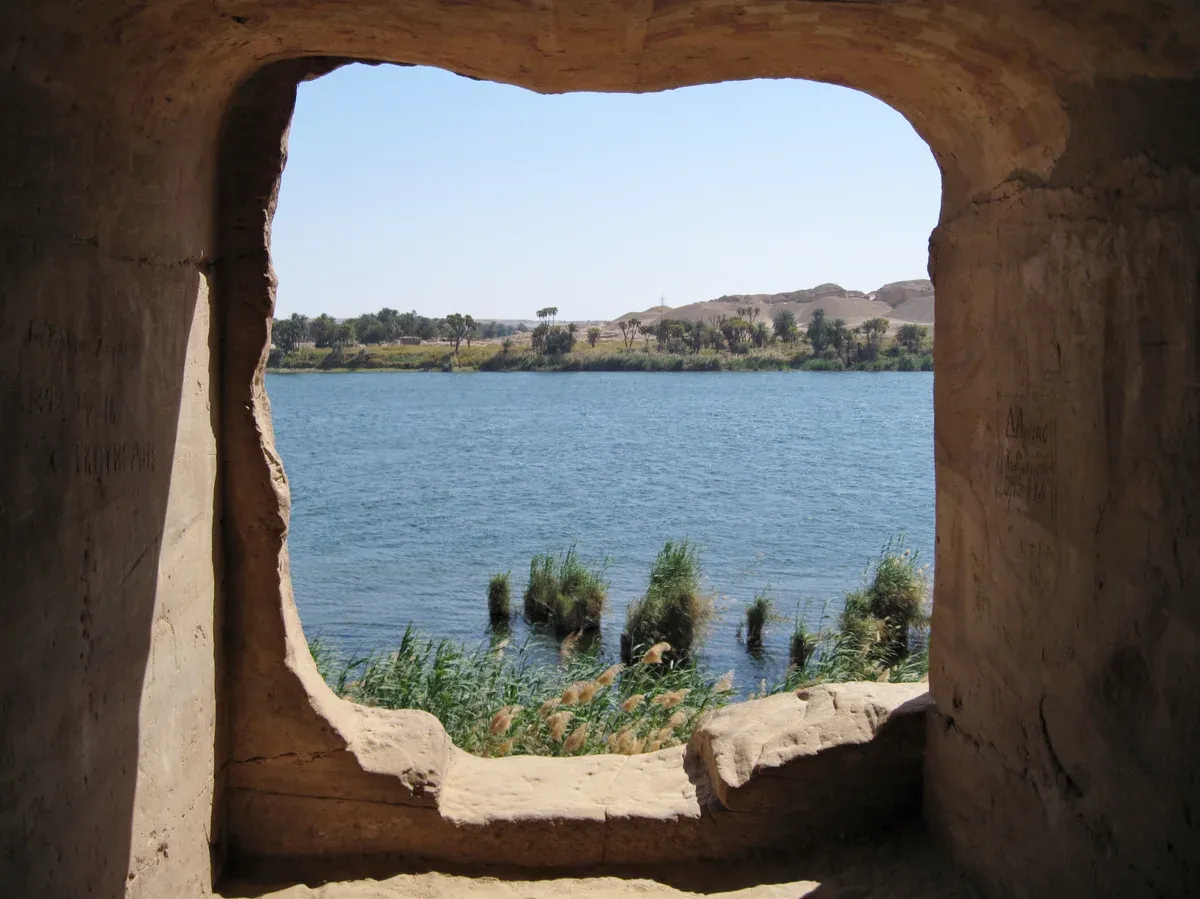
A cut opening in the Gebel el-Silsila quarries frames the river. Photo: Olaf Tausch, CC BY 3.0, via Wikimedia Commons
Silsila Between Kom Ombo and Edfu
Gebel el-Silsila sits on the water between the two best-known temple stops on the Luxor to Aswan stretch, and most boats sail straight past it.
Where It Sits on the Route
Gebel el-Silsila lies 65 km north of Aswan, between Edfu and Kom Ombo. Sailing downstream from Aswan you reach Kom Ombo Temple first, then the sandstone cliffs of Silsila, then Edfu Temple. Most cruise itineraries list only Kom Ombo and Edfu as stops, so the quarries are usually a view from the deck rather than a landing.
The site has more than 120 separate sandstone quarries on both banks. On a Nile river cruise you see the rock faces from the water, which is how the ancient stone was shipped out. Compare itineraries across the Nile river cruises to see which boats actually tie up.
A Dahabiya or Felucca Day at Silsila
Two boat types in the catalog do stop. The Luxury Dahabiya Cruise, at $1,100 per person for 3 nights from Aswan, lists Gebel El-Silsila among its stops between Kom Ombo and Edfu, with entrance fees to the listed sites included. The Overnight Felucca from Aswan has a 3-night option that calls at Kom Ombo, Gebel El-Silsila and Edfu for about 1 hour each, cooked meals on board and up to 12 travelers.
Feluccas cannot sail after dark, so the crew moors near sunset and progress depends on wind.
Tips for Visiting Gebel El-Silsila
Do
- Do check that your cruise names Gebel El-Silsila in its stops list, because most itineraries between Aswan and Luxor skip it entirely.
- Do go early in the day, because the site opens at 7:00am and closes at 4:00pm, and the felucca stop lasts about 1 hour.
- Do carry cash for entry tickets if you book the felucca, because its listing excludes entry tickets for sightseeing.
- Do consider the dahabiya if you want tickets handled, because its $1,100 price includes entrance fees for the sites in the itinerary.
- Do combine Silsila with Kom Ombo and Edfu, because the 3-night felucca route covers all three at roughly 1 hour each.
Don't
- Don't assume temple tickets are in your fare, because most Nile cruise listings exclude entrance fees and only some tours include them.
- Don't plan a road trip from Luxor or Aswan, because the listings that call at Gebel el-Silsila do it by boat.
- Don't arrive after mid-afternoon, because the official opening runs only 7:00am to 4:00pm.
- Don't expect ship-scale facilities on arrival, because you are stepping from a small sail boat onto an archaeological site.
Gebel El-Silsila: Questions and Answers
Where is Gebel el-Silsila?
It is 65 km north of Aswan, between Edfu and Kom Ombo on the Nile. If you are sailing that stretch, read the guides to Kom Ombo Temple and Edfu Temple to place it in context.
What is Gebel el-Silsila famous for?
Sandstone. The site holds more than 120 separate quarries that supplied temple building stone from at least the 18th Dynasty through Greco-Roman times, along with rock-cut shrines and a speos probably begun under Hatshepsut. You can see it on the Luxury Dahabiya Cruise, which lists the site as a stop.
Can you visit Gebel el-Silsila from a Nile cruise?
Only from the listings that name it as a stop. On this site those are the dahabiya and the felucca, and large ships sailing the same stretch do not list it. The Overnight Felucca from Aswan has a 3-night option that stops at Gebel El-Silsila for about 1 hour, with entry tickets excluded from the price.
What are the opening hours of Gebel el-Silsila?
The ministry price list shows the site open 7:00am to 4:00pm. Plan any boat stop inside that window, and note that the felucca stop runs about 1 hour on the 3-night route.
Who built the speos at Gebel el-Silsila?
The west bank speos, once called the temple of Horemheb, is dedicated to seven deities including Amun and Sobek, and was probably created under Hatshepsut in the 18th Dynasty. Later pharaohs Seti I, Ramesses II and Merenptah added rock-cut shrines at the same site.
Is Gebel el-Silsila worth it compared with Edfu or Kom Ombo?
It is a different kind of site: a quarry landscape with shrines and stelae rather than a single standing temple. If your boat stops at all three, take all three, and use the Edfu Temple guide for the next stop.